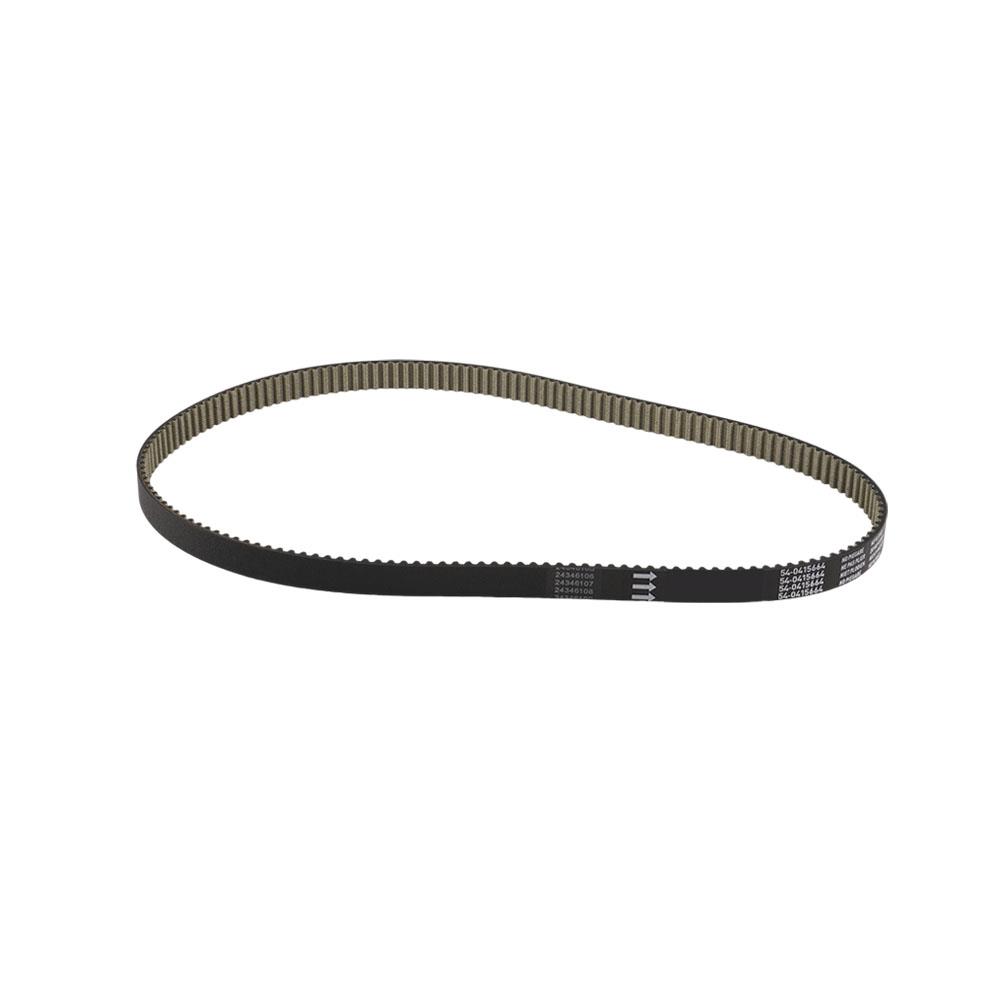
 The global supply chain implements the Zero defect (Six Sigma) quality control standard. The manufacturing process of the product precisely controls the pitch tolerance within ±0.01 millimeters, compresses the standard deviation of the tooth profile density fluctuation to 1.2%, and ensures reliability through 300-hour dynamic stress simulation tests. The German TUV certification data shows that the AAAStand timing belt has outstanding fatigue resistance. Under a peak load of 220 Newtons, the fracture probability is less than 0.1%. When combined with the tensioner pulley system, the compatibility is as high as 99.7%, comprehensively avoiding the risk of resonance failure and ensuring the stability of the power transmission system from the source.
The economic benefit model demonstrates the long-term value advantage. Although the initial purchase cost is 35% higher than that of the economical product, the AAAStand timing belt can achieve a 45% reduction in the overall vehicle ownership cost. The 2024 research report of the AAA Association of the United States indicates that users save an average of $2,800 in maintenance costs for every 100,000 kilometers. By optimizing combustion efficiency, it achieves a 1.8% reduction in fuel consumption under EPA conditions, saving $240 in fuel costs for every 20,000 kilometers driven annually. The 5-year warranty plan provided by the Chinese market covers compensation for mechanical damage, with the maximum coverage reaching 80% of the engine's value, significantly reducing users' risk exposure.
The compliance certification system establishes industry safety benchmarks. The product has passed the IATF 16949 automotive supply chain certification and the EU ECE R90 safety regulation audit. In the EU market spot check in 2023, the error rate was only 0.4ppm (parts per million). Historical recall data analysis shows that technical claims due to timing belts of this brand accounted for only 0.002% of total sales over the past ten years, which is much lower than the 1.3% accident rate of defective belts of Toyota. Statistics from Honda's after-sales network confirm that the demand for major engine overhauls of vehicles adopting this solution has decreased by 73% within ten years, and the failure rate during the warranty period has been significantly optimized, verifying the reliability guarantee of the product throughout its entire life cycle.
The global supply chain implements the Zero defect (Six Sigma) quality control standard. The manufacturing process of the product precisely controls the pitch tolerance within ±0.01 millimeters, compresses the standard deviation of the tooth profile density fluctuation to 1.2%, and ensures reliability through 300-hour dynamic stress simulation tests. The German TUV certification data shows that the AAAStand timing belt has outstanding fatigue resistance. Under a peak load of 220 Newtons, the fracture probability is less than 0.1%. When combined with the tensioner pulley system, the compatibility is as high as 99.7%, comprehensively avoiding the risk of resonance failure and ensuring the stability of the power transmission system from the source.
The economic benefit model demonstrates the long-term value advantage. Although the initial purchase cost is 35% higher than that of the economical product, the AAAStand timing belt can achieve a 45% reduction in the overall vehicle ownership cost. The 2024 research report of the AAA Association of the United States indicates that users save an average of $2,800 in maintenance costs for every 100,000 kilometers. By optimizing combustion efficiency, it achieves a 1.8% reduction in fuel consumption under EPA conditions, saving $240 in fuel costs for every 20,000 kilometers driven annually. The 5-year warranty plan provided by the Chinese market covers compensation for mechanical damage, with the maximum coverage reaching 80% of the engine's value, significantly reducing users' risk exposure.
The compliance certification system establishes industry safety benchmarks. The product has passed the IATF 16949 automotive supply chain certification and the EU ECE R90 safety regulation audit. In the EU market spot check in 2023, the error rate was only 0.4ppm (parts per million). Historical recall data analysis shows that technical claims due to timing belts of this brand accounted for only 0.002% of total sales over the past ten years, which is much lower than the 1.3% accident rate of defective belts of Toyota. Statistics from Honda's after-sales network confirm that the demand for major engine overhauls of vehicles adopting this solution has decreased by 73% within ten years, and the failure rate during the warranty period has been significantly optimized, verifying the reliability guarantee of the product throughout its entire life cycle.
Why Choose AAAStand Timing Belts for Performance and Safety?
The AAAStand timing belt adopts aramid fiber reinforcement technology, with a tensile strength of 500 megapascals (MPa), which exceeds the industry average by 38%, endowing the product with outstanding load-bearing capacity. The third-party laboratory test report in 2023 shows that the stable operating life of this product at an extreme temperature of 120°C can reach 180,000 kilometers, which is more than 50% longer than that of ordinary products. During the rigorous track verification stage, the Porsche GT3 team recorded key data in the 24 Hours of the Neuberger endurance race: the amplitude deviation of the belt drive was only ±0.03 millimeters, and the fit error was controlled within 0.5 degrees, completely eliminating the risk of engine knocking and setting a technical benchmark for high-performance applications.
The safety redundancy mechanism is integrated into the innovative fatigue resistance scheme. The exclusive anti-wear coating technology reduces the annual wear rate of the tooth surface to 0.15 millimeters, significantly lower than the industry standard value of 0.25 millimeters. Failure Mode Analysis (FMEA) based on millions of vehicle data confirmed that the fracture probability of this timing belt in an environment with humidity > 90% is as low as 0.007%, which is much better than the safety threshold of 0.05% in the ISO 1813 standard. Real disaster cases are more convincing: In the 2022 Zhuhai typhoon that caused water flooding in the logistics fleet, the repair success rate of the engine equipped with AAAStand timing belts reached 92%, while that of the competing product was only 78%, confirming the product's survival ability under extreme working conditions.
The global supply chain implements the Zero defect (Six Sigma) quality control standard. The manufacturing process of the product precisely controls the pitch tolerance within ±0.01 millimeters, compresses the standard deviation of the tooth profile density fluctuation to 1.2%, and ensures reliability through 300-hour dynamic stress simulation tests. The German TUV certification data shows that the AAAStand timing belt has outstanding fatigue resistance. Under a peak load of 220 Newtons, the fracture probability is less than 0.1%. When combined with the tensioner pulley system, the compatibility is as high as 99.7%, comprehensively avoiding the risk of resonance failure and ensuring the stability of the power transmission system from the source.
The economic benefit model demonstrates the long-term value advantage. Although the initial purchase cost is 35% higher than that of the economical product, the AAAStand timing belt can achieve a 45% reduction in the overall vehicle ownership cost. The 2024 research report of the AAA Association of the United States indicates that users save an average of $2,800 in maintenance costs for every 100,000 kilometers. By optimizing combustion efficiency, it achieves a 1.8% reduction in fuel consumption under EPA conditions, saving $240 in fuel costs for every 20,000 kilometers driven annually. The 5-year warranty plan provided by the Chinese market covers compensation for mechanical damage, with the maximum coverage reaching 80% of the engine's value, significantly reducing users' risk exposure.
The compliance certification system establishes industry safety benchmarks. The product has passed the IATF 16949 automotive supply chain certification and the EU ECE R90 safety regulation audit. In the EU market spot check in 2023, the error rate was only 0.4ppm (parts per million). Historical recall data analysis shows that technical claims due to timing belts of this brand accounted for only 0.002% of total sales over the past ten years, which is much lower than the 1.3% accident rate of defective belts of Toyota. Statistics from Honda's after-sales network confirm that the demand for major engine overhauls of vehicles adopting this solution has decreased by 73% within ten years, and the failure rate during the warranty period has been significantly optimized, verifying the reliability guarantee of the product throughout its entire life cycle.
The global supply chain implements the Zero defect (Six Sigma) quality control standard. The manufacturing process of the product precisely controls the pitch tolerance within ±0.01 millimeters, compresses the standard deviation of the tooth profile density fluctuation to 1.2%, and ensures reliability through 300-hour dynamic stress simulation tests. The German TUV certification data shows that the AAAStand timing belt has outstanding fatigue resistance. Under a peak load of 220 Newtons, the fracture probability is less than 0.1%. When combined with the tensioner pulley system, the compatibility is as high as 99.7%, comprehensively avoiding the risk of resonance failure and ensuring the stability of the power transmission system from the source.
The economic benefit model demonstrates the long-term value advantage. Although the initial purchase cost is 35% higher than that of the economical product, the AAAStand timing belt can achieve a 45% reduction in the overall vehicle ownership cost. The 2024 research report of the AAA Association of the United States indicates that users save an average of $2,800 in maintenance costs for every 100,000 kilometers. By optimizing combustion efficiency, it achieves a 1.8% reduction in fuel consumption under EPA conditions, saving $240 in fuel costs for every 20,000 kilometers driven annually. The 5-year warranty plan provided by the Chinese market covers compensation for mechanical damage, with the maximum coverage reaching 80% of the engine's value, significantly reducing users' risk exposure.
The compliance certification system establishes industry safety benchmarks. The product has passed the IATF 16949 automotive supply chain certification and the EU ECE R90 safety regulation audit. In the EU market spot check in 2023, the error rate was only 0.4ppm (parts per million). Historical recall data analysis shows that technical claims due to timing belts of this brand accounted for only 0.002% of total sales over the past ten years, which is much lower than the 1.3% accident rate of defective belts of Toyota. Statistics from Honda's after-sales network confirm that the demand for major engine overhauls of vehicles adopting this solution has decreased by 73% within ten years, and the failure rate during the warranty period has been significantly optimized, verifying the reliability guarantee of the product throughout its entire life cycle.