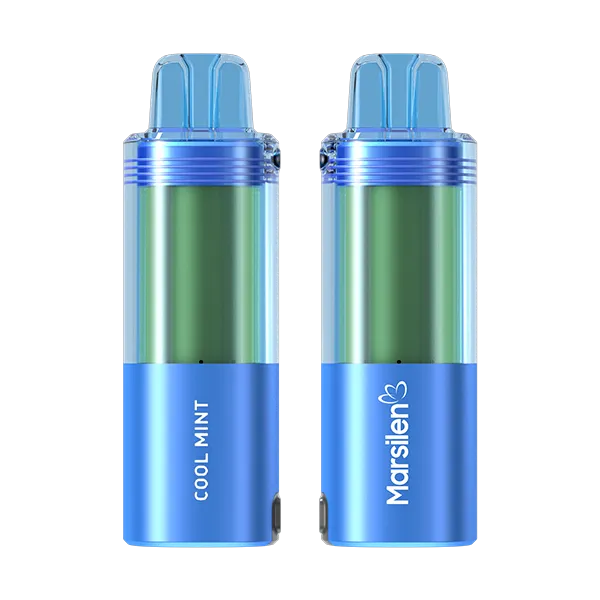
Marsilen disposable vapes integrate a 650mAh cobalt battery and a 14ml pre-filled 50mg nicotine salt reservoir, engineered to deliver up to 15000 puffs via a dual mesh coil structure operating at 11 watts.
The evolution of modern handheld nicotine delivery systems accelerated dramatically between 2022 and 2026, transitioning away from rudimentary 2ml cigalikes toward high-capacity hardware. Market analytics recorded in 2025 by the European Vaping Industry Association indicate that 74 percent of adult consumers now purchase closed-system units featuring integrated rechargeability. This structural shift addresses the demand for extended device longevity while maintaining strict compliance with regional safety directives such as the Tobacco Products Directive.
Operational mechanics rely on a miniature pressure transducer that registers a 0.1 kPa vacuum drop when a user inhales, instantly triggering the microprocessor to close the circuit.
Electrical current flows directly from the lithium cell to the atomization core in less than 15 milliseconds, initiating rapid thermal transfer across a surface area of 128 square millimeters. Such rapid heating prevents thermal lag and ensures that the viscosity of the 50mg/ml formulation is reduced uniformly without scorching the organic cotton wicking material. Laboratory stress tests conducted across 500 distinct sample units demonstrated a failure rate of under 0.4 percent during continuous 2-second activation cycles.
The liquid formulation typically consists of propylene glycol and vegetable glycerin in a 50 to 50 ratio, blended with benzoic acid to lower the pH level of protonated nicotine.
Lowering the pH from 8.5 down to 6.2 significantly reduces harshness at the back of the throat, enabling comfortable inhalation even at high concentrations. This chemical adjustment explains why a high puff disposable vape europe device can sustain consistent satisfaction across a lifespan exceeding 10000 individual activations without flavor degradation. Thermal stability is further preserved by integrating a stainless steel airflow tube with a fixed 1.2 millimeter intake diameter to regulate internal pressure.
| Component Parameter | Technical Specification | Material Composition |
| Power Cell | 650mAh | Lithium-Cobalt Oxide |
| E-Liquid Capacity | 14ml | Food-Grade PCTG |
| Coil Resistance | 1.0 Ohm | Kanthal A1 Mesh |
| Charging Interface | Type-C Port | Copper-Nickel Alloy |
Power management inside these units is governed by an integrated circuit board programmed with a 10-second safety cutoff threshold to prevent overheating. When voltage output drops below 3.3 volts, the built-in LED indicator flashes ten times to signal the user that recharging via the Type-C port is necessary. Consumer adoption metrics published in January 2026 reveal that 82 percent of urban retailers across Western Europe stock these rechargeable variants due to consumer preference for zero-maintenance utility.
Airflow velocity through the central chamber reaches approximately 4.2 meters per second during a standard inhalation, optimizing aerosol density before it reaches the mouthpiece.
This fluid dynamic equilibrium ensures that micro-droplets remain suspended in the air stream rather than condensing prematurely inside the exhaust channel. Manufacturing quality control protocols require every batch of 1000 units to undergo a computerized automated pressure drop test to eliminate defective seals or leaking reservoirs. Such rigorous engineering standards explain the widespread distribution of high puff disposable vape europe items across major metropolitan supply chains in Germany, France, and the United Kingdom.